Test - Story
In Focus:
Peggy Kuiper
Nullam aliquet massa sit amet sollicitudin vehicula. Duis eget feugiat nisi. Donec eros metus, consectetur sed feugiat eu, commodo ut ipsum.
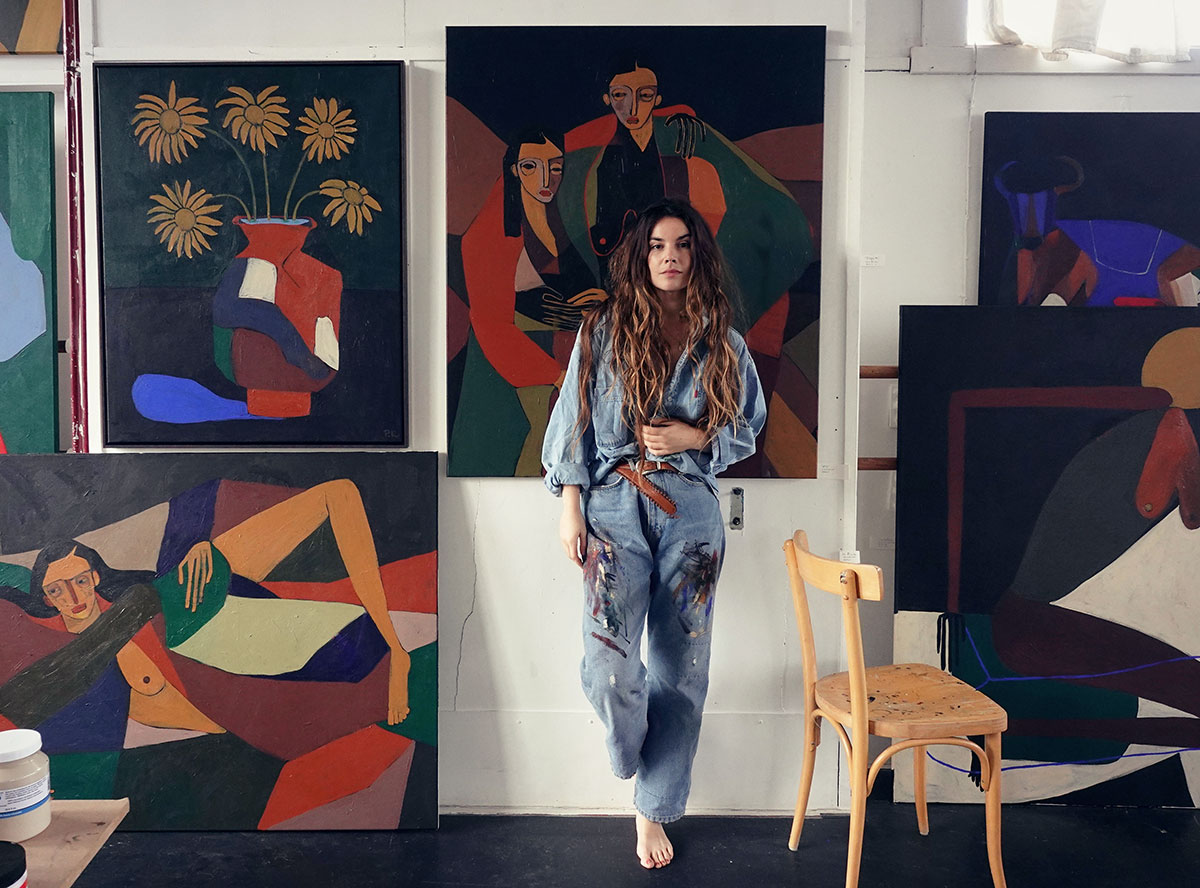
Gazing out at a silent gray ocean or placid blue lake is invariably mesmerizing. The expanse of space and color captivates, inspiring our own stories, or to coin an ancient Latin phrase, “The deepest rivers flow with the least sound.”
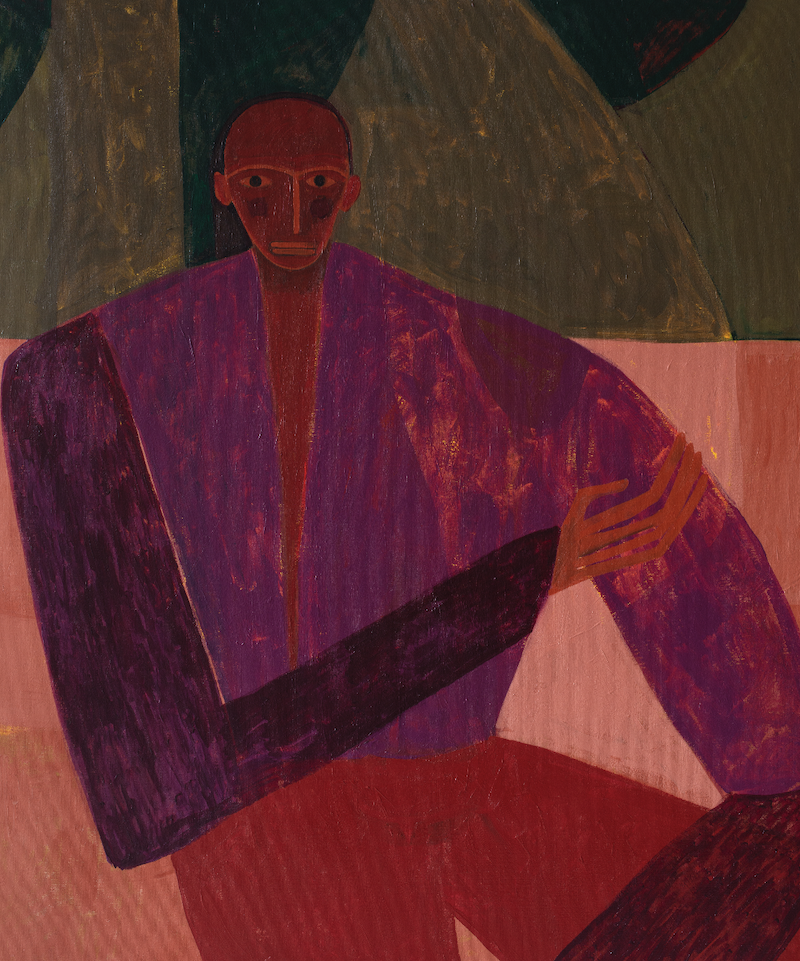
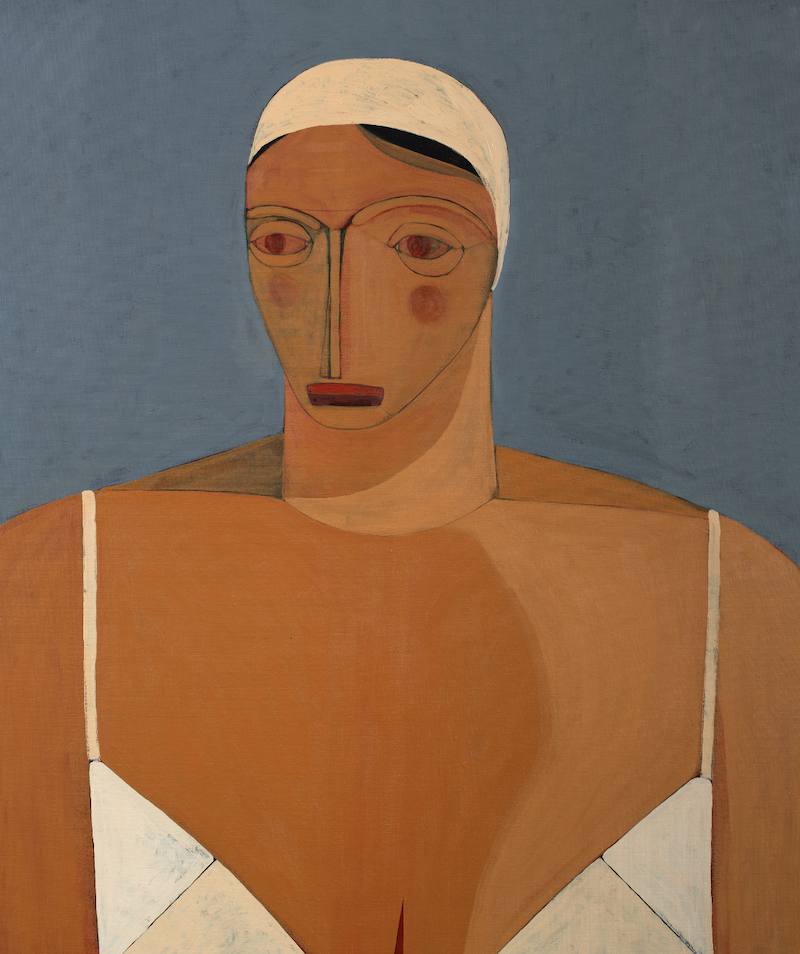
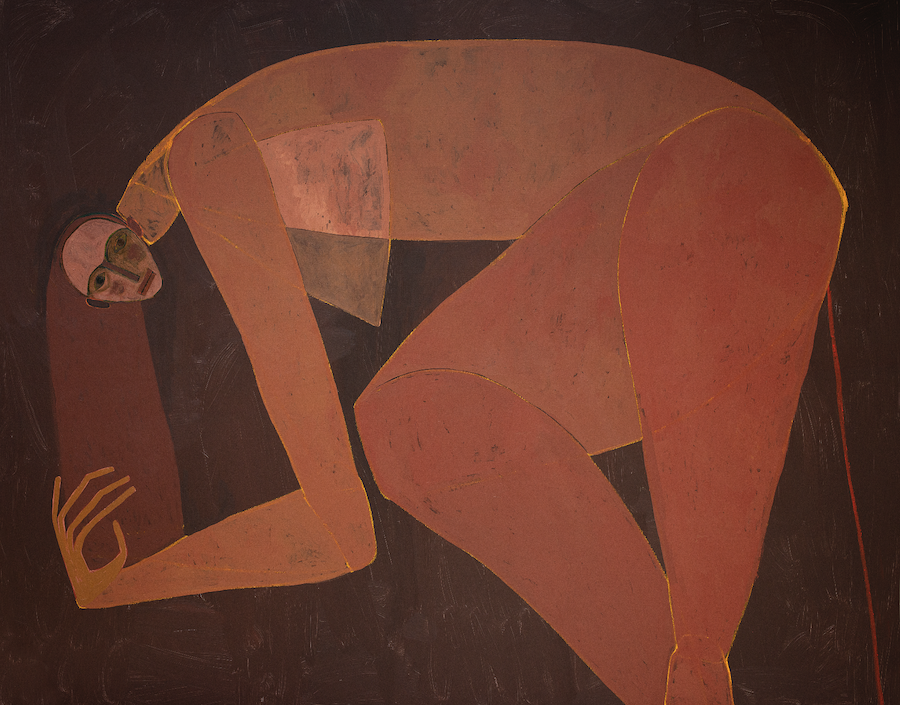
Amsterdam-based Peggy Kuiper’s paintings have the same, powerful effect. An angular face, almond eyes, and silent mouth bore through a richly hued canvas, and suddenly (or eventually) they may cry bitter tears or burst into laughter. It’s Kuiper’s perfect composition and color that deftly paints the scene, but she wants it to be your call too. A flower emerges from a vase, ready to bloom or droop in an elegant farewell. Her background in photography and graphic design informs the architecture in her work. The fact that Peggy’s emails are signed by her and her dog Balou reveals her soul.
Date Published
29.07.2024
Written by
Andreas Shaw
Andreas Shaw: I think it’s interesting that you have talked about being confident in having a clear vision in creating your work. Do you attribute some of that to studying graphic design in art school and then working for clients who gave you a concept to illustrate and define?
Paragraph one - Peggy Kuiper: It’s rather that, ever since I was young, I sensed and swiftly learned that I could trust my intuition. And the more I leaned into this, the more things would just come to me naturally. The same goes for painting, I work very intuitively. Now, I did acquire a feel for the business side of things because of my background, also working for a design agency, realizing the importance of constantly repositioning myself as an artist. In doing so,
Paragraph two - I need to be very clear about which people and projects to work with or not, daring to say “No” and feeling confident in my choices. Having a clear focus, and making clear decisions, allows me to not stay stuck in this insecure in-between, but just move forward. In the end, there is never a right or wrong decision but just goes as it goes. If I make a bad call—if there ever really was one—so be it! Yet no matter what, it will allow me to grow. I trust myself and I'm very go-with-the-flow in that sense.
Caption
How did you get an internship with the prominent, and very opinionated, Dutch graphic artist Anthon Beeke? Was he intimidating and what did you learn from him?
He’s meant a lot to me. When I was still studying at the academy, I was sure about my pursuits, but I was also working silently in the background. I witnessed Anthon Beeke being the autonomous artist that he was, operating on his own terms and directing his own career path. Instead of taking on plain commissions where a client offers feedback, people came to him for an “Anthon Beeke.” He taught me, among other things, how important it is to show yourself and be true to your vision. I was very fond of him.
What do you think is the most important element in producing sharp, defining graphics?
If you’re speaking of my art, I don’t think there is really a good or bad way to go about the practice.
In bibendum, ante quis semper mattis, nulla nisi dictum nunc.
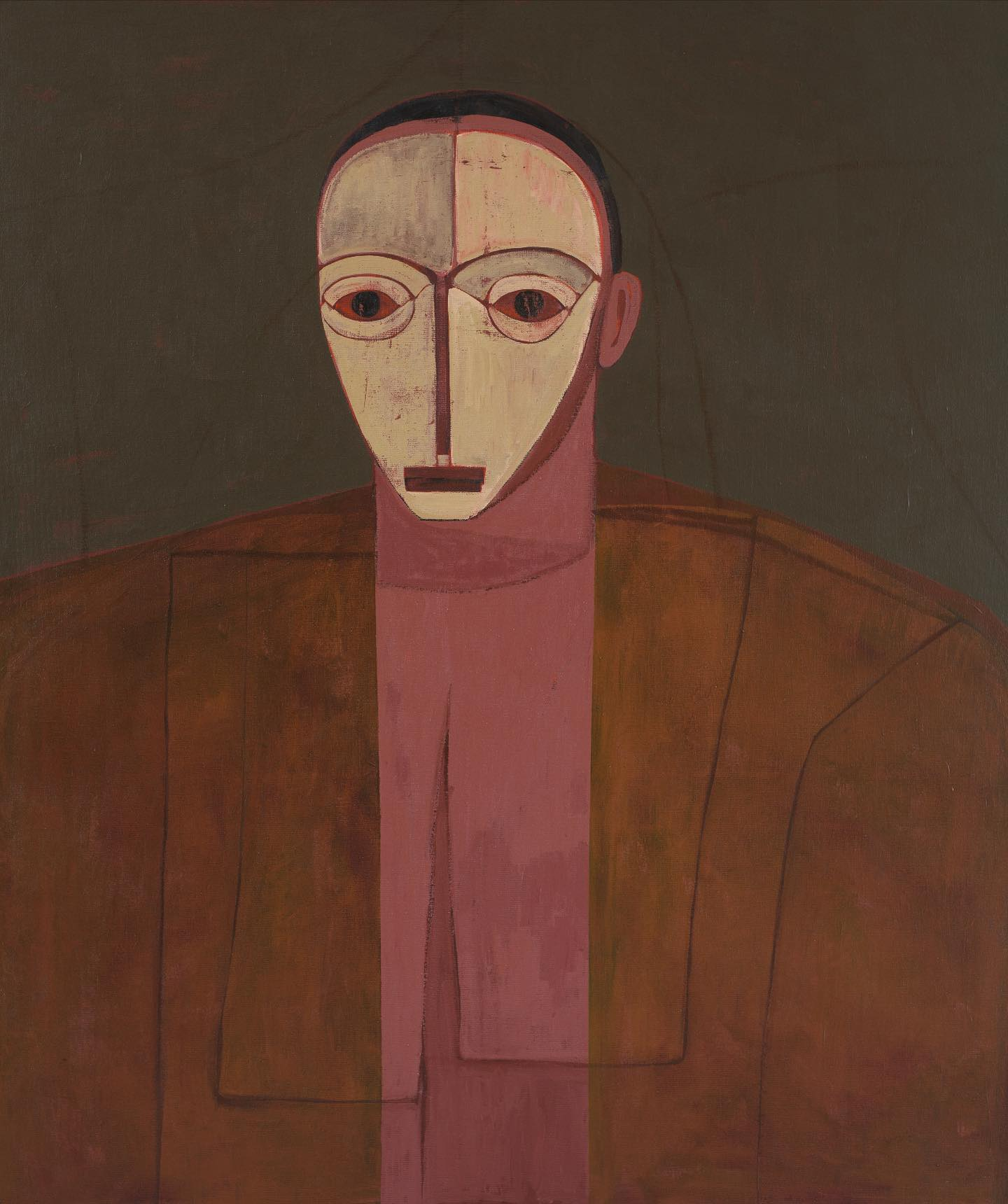
How did you develop your signature facial features, the angular faces, narrow eyes, and prominent cheeks? Were they on the canvas from the beginning?
I think it was already there when I was very young and drawing. Then, as I started painting more in adulthood, I just refined my style. Personally, I don’t like to overanalyze these things because I feel my paintings should be something to be experienced, though one thing I can say that I think is quite interesting is that I have always wanted to keep the shapes of the figures quite simplistic because, in my opinion, they then elicit more emotion. If the faces are too defined if they are recognized as actual people, it would become a distraction and that is why the faces are quite abstract.
“If I don’t love something, I swiftly paint over it. That’s why my work is very layered...”
Do people sit for you? Or, given your experience as a fashion photographer, do you shoot pictures for your paintings?
Both options are actually false. I don’t photograph or have someone sit for me before I start drawing or painting. It all comes from my mind, a collection of memories, emotions, and dreams. My figures, not people or portraits, stem from my inner world and I would characterize it as an embodiment of my emotional landscape.
In bibendum, ante quis semper mattis, nulla nisi dictum nunc.
How much autonomy did you have in fashion? Did you have more input? I’m wondering if you felt constrained by having to achieve something classically beautiful.
I wouldn’t say I felt constrained then or now as it’s all part of the journey.
Was there something that planted a seed about a shift to painting? Did you draw as a child or take painting in art school?
I actually drew a lot as a child, but I quit somewhere down the line in my teenage years. I did take drawing classes at art academy, but for some reason, it didn’t quite pique my interest. Then around my thirties, I picked up the paintbrush again. I guess that also represents a phase in life when you have acquired more of a sense of self. I knew who I was, I allowed myself to do what really energized me and I once again got curious about my younger self. Then I found this map with old drawings that I’d made and that’s when I felt called to draw again. When Covid lockdown came there were no more photography jobs, so I had all the time and space to paint and paint and paint.
What or who was the first subject you painted? How and where did you start?
It must have been a figure, something that kind of resembles the style I had as a child, an imaginary figure not a portrait because it was not necessarily about a person, but more about the emotion it invokes. It was just experimenting and being very playful about it. I had no intention of taking it to a professional level. That also gave me even more of a sense of freedom without any constraints.