Threads of Storytelling: Louis Barthélemy on Art, Craft, and Freedom
Threads of Storytelling: Louis Barthélemy on Art, Craft, and Freedom
We delve into the creative journey of French multidisciplinary artist and designer Louis Barthélemy, whose work spans the realms of traditional craftsmanship and storytelling.
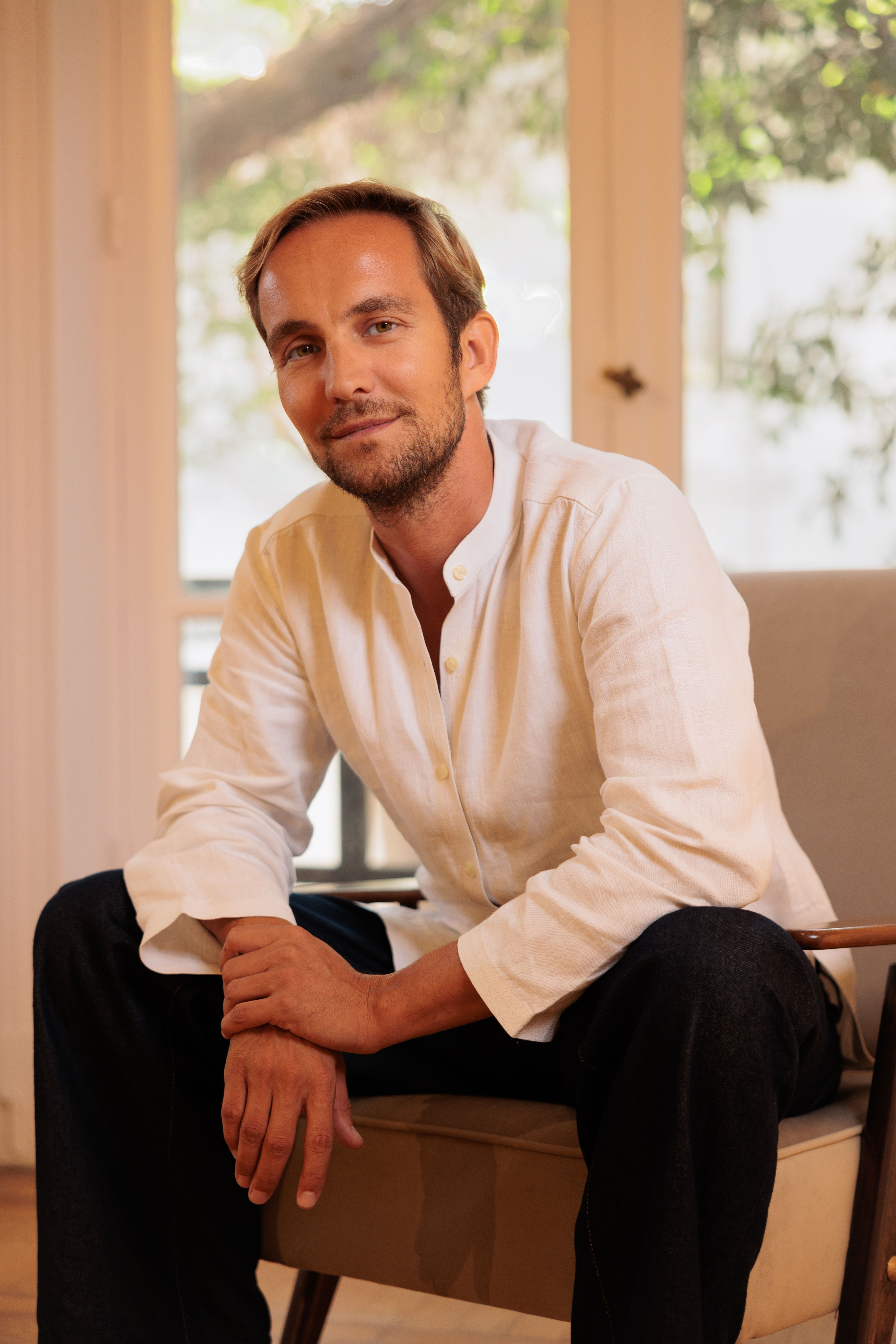
Through his exploration of heritage techniques and his reverence for meticulous craftsmanship, Barthélemy’s work becomes a bridge between past and present, personal expression and cultural legacy. In the following edited extracts from our conversation with Barthélemy at Ubuntu Gallery in Cairo last fall, he shares insights into his artistic philosophy, the beauty of collaboration, and the freedoms he treasures in his creative practice.
Date Published
07.01.2025
Written by
Farida Mortada
What was your first experience of art?
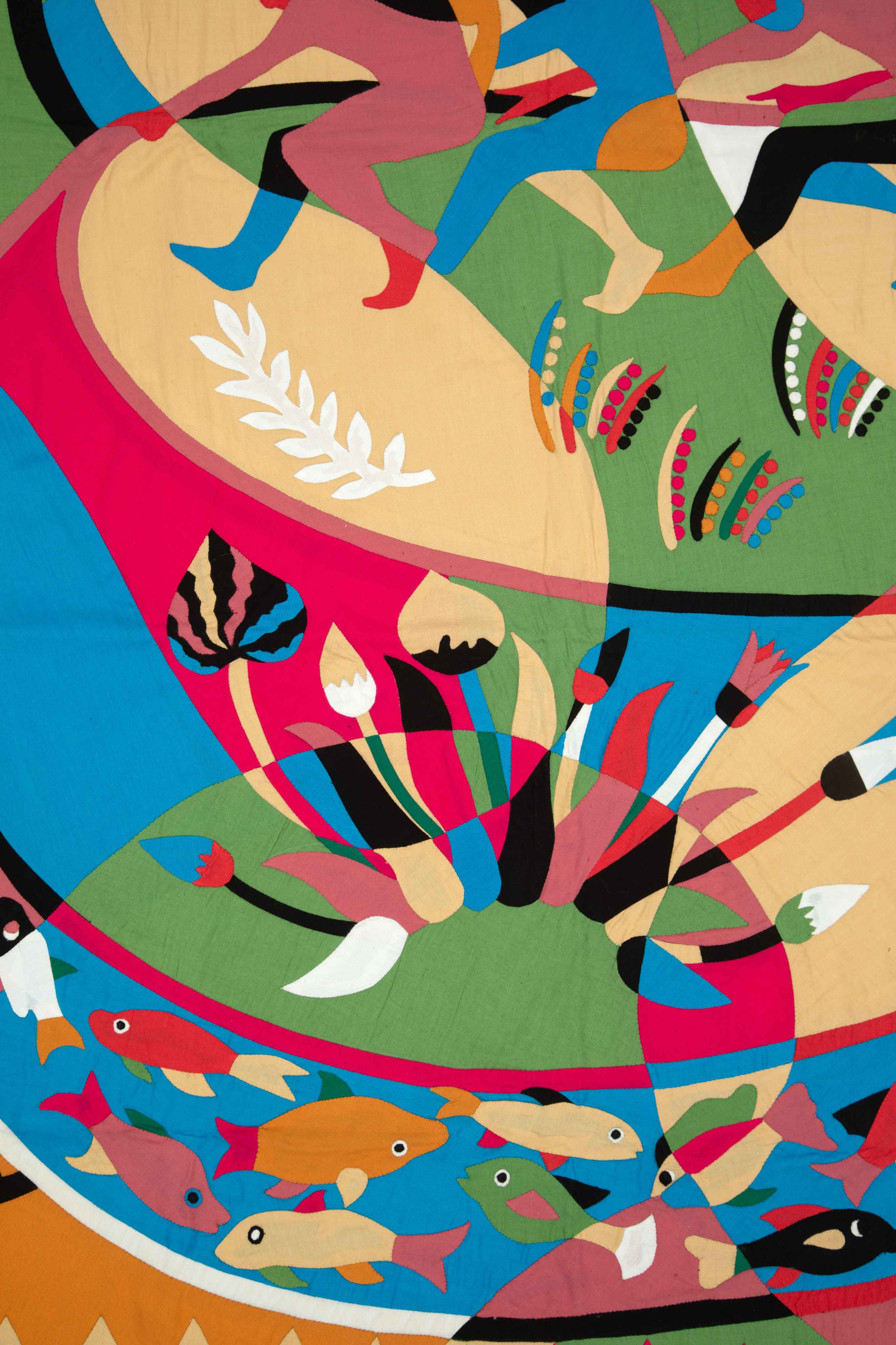
My first experience of art must have been in nursery school. We were introduced to the work of Henri Matisse, specifically his collages and frescoes out of paper cut outs. Matisse was probably the first artist I was acquainted with, and he has remained a recurring influence since, both in my choice of colour, and in my medium, because Kheyamiya is very much a collage of scraps of fabric.
How has your background in fashion influenced the artist you are today?
First, I think it taught me the appreciation of hard work, meticulous craftsmanship, attention to detail, the commitment to beauty, and getting to a sense of harmony. I joined Dior when it was under the helm of John Galliano. He’s an excellent storyteller, and even though my medium has changed, I still strive to incorporate Galliano’s philosophy of storytelling through whatever medium I use.
What drew you to the techniques of Kheyamiya?
Khayamiya is derived from the word “khayma”, meaning tent in Egypt. It was introduced in Cairo during the Ottoman Empire, and is a technique of ornamental application of fabric on cotton canvas. It’s used to decorate pavilions during military campaigns for funerals and weddings, and is a technique very present in today’s life in Egypt.
When I started researching this technique, I was working as a fashion designer, so I had this sensitivity to craft and textile. Through the artisans I met in Cairo, I was introduced to a craft that would allow me to express myself independently, free from the fashion framework.
Can you describe your process in collaboration with the Kheyamiya tentmakers?
I engaged with one artisan called Tarek El Safty on a piece that I designed after we met in Cairo. I returned to Cairo the following month, and we started sampling things together. Ever since we’ve been close collaborators; trying to redefine the idea of Kheyamiya and tell stories that echo our time.
There are only a few remaining crafts masters in town. Those still there all work in Islamic Cairo around Bab Zuweila, where I go almost daily when I’m in Egypt, to work with the artisans.
Together, we tell stories we translate from my drawings through to the final design. Initially, I come with a story that I want to narrate and illustrate. I will do sketches which will then be composed into a final coloured drawing, in real scale. To guide the artisan, I translate that same colour drawing into a black and white outline—the skeleton of the tapestry—which is traced onto the canvas, before hand sewing cuts of coloured fabric onto the canvas.
It’s very meticulous work because we don’t see any of the stitches; they’re hidden under the fabric, so it takes years to master this technique of applique. Once all those layered fabrics are stitched onto the canvas, we start with the thread embroidery.
What have you learned in your collaborations and conversations with the tentmakers in Cairo?
Through those collaborations and conversations with the 10 makers of Cairo, including Tarek, I learned how to let go of control because these projects are collaborative. Although there is an initial intention—the drawings, the concepts, and the overall idea—it’s the craft masters who are the ones interpreting these ideas into tangible artworks, and a lot of it is in their hands.
I think what I’ve enjoyed in those conversations is a mutual exchange. I come with a story and they have their own. It’s the interwoven stories into one artwork that I find very enriching and humbling as well, as there wouldn’t be any of these tapestries without their touch and their implications.
What I learned from this very hands-on production process is the integrity and the commitment it takes to become craft masters like them.
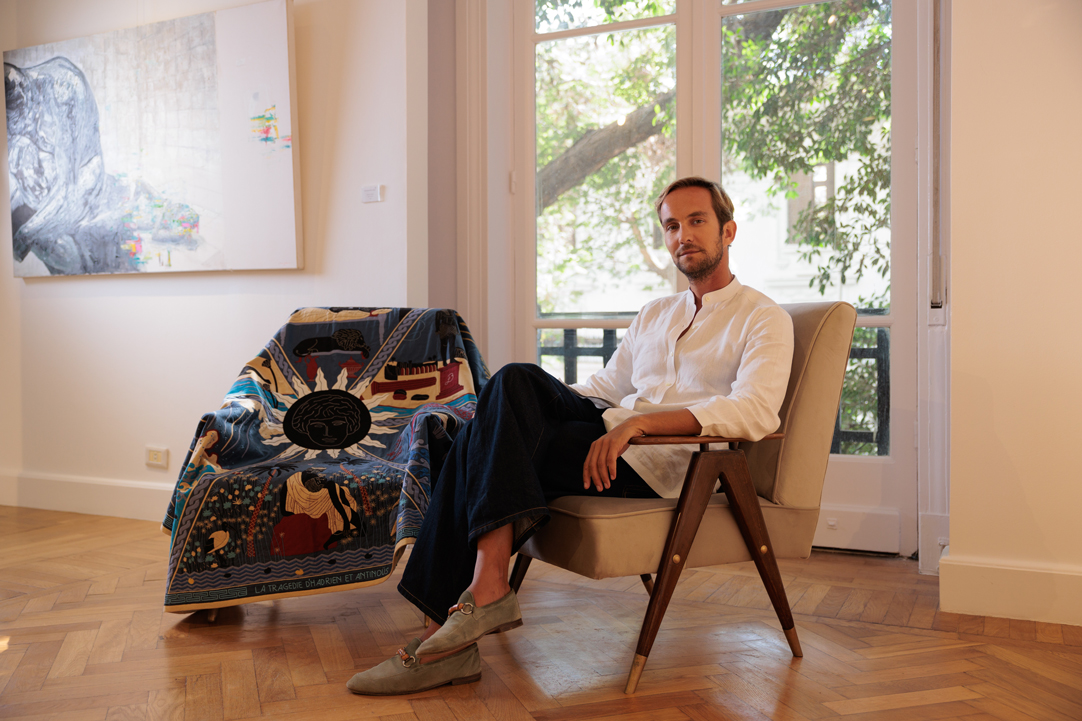
Louis Barthélemy in his studio in Paris
How have your personal experiences shaped you into the artist you are today?
There was an affinity for drawing, and an affinity for beauty at a young age, but I didn’t know how to express it, or through what medium. I tried through fashion, although I saw certain limitations because it’s an industry and it delivers products before art. Art is something that comes from within that cannot really be framed by a market or by any sort of rules—it’s so innate.
What led me to sense this, and have the courage to affirm myself from all those rules and those fears was through the adversity of illness. It was one year of introspection through treatment that made me realise there was no time left to wait or to ponder on what I would like to do, and it’s right after my recovery that I started travelling almost obsessively.
There was an innate pulse of expressing something that belongs to me and that reflects my soul. Destiny has guided me, and a bit of intuition, but also I think the failures and moments of isolation or moments of burden in the past have helped me take risks and be myself.
It’s a lifelong journey. I try to be receptive to what’s around me: the elements, the encounters, the generosity, the diversity, because I think it’s really all those elements that really nourish one’s soul.
What do you treasure most in your studio?
In order to move forward, the one thing I treasure the most in my studio is the fact that it’s spaceless. I work across different environments and different countries from Tunisia, to Egypt and Benin, and it’s this geographical flexibility that I love.
What is the most beautiful aspect of being an artist?
The most beautiful aspect of being an artist is being able to express something singular and express something extremely personal in a format of my choice. But it’s also the freedom; the freedom to be and not feeling tied to any obligations whatsoever. It’s this free frame environment that I really cherish.
Featured Work
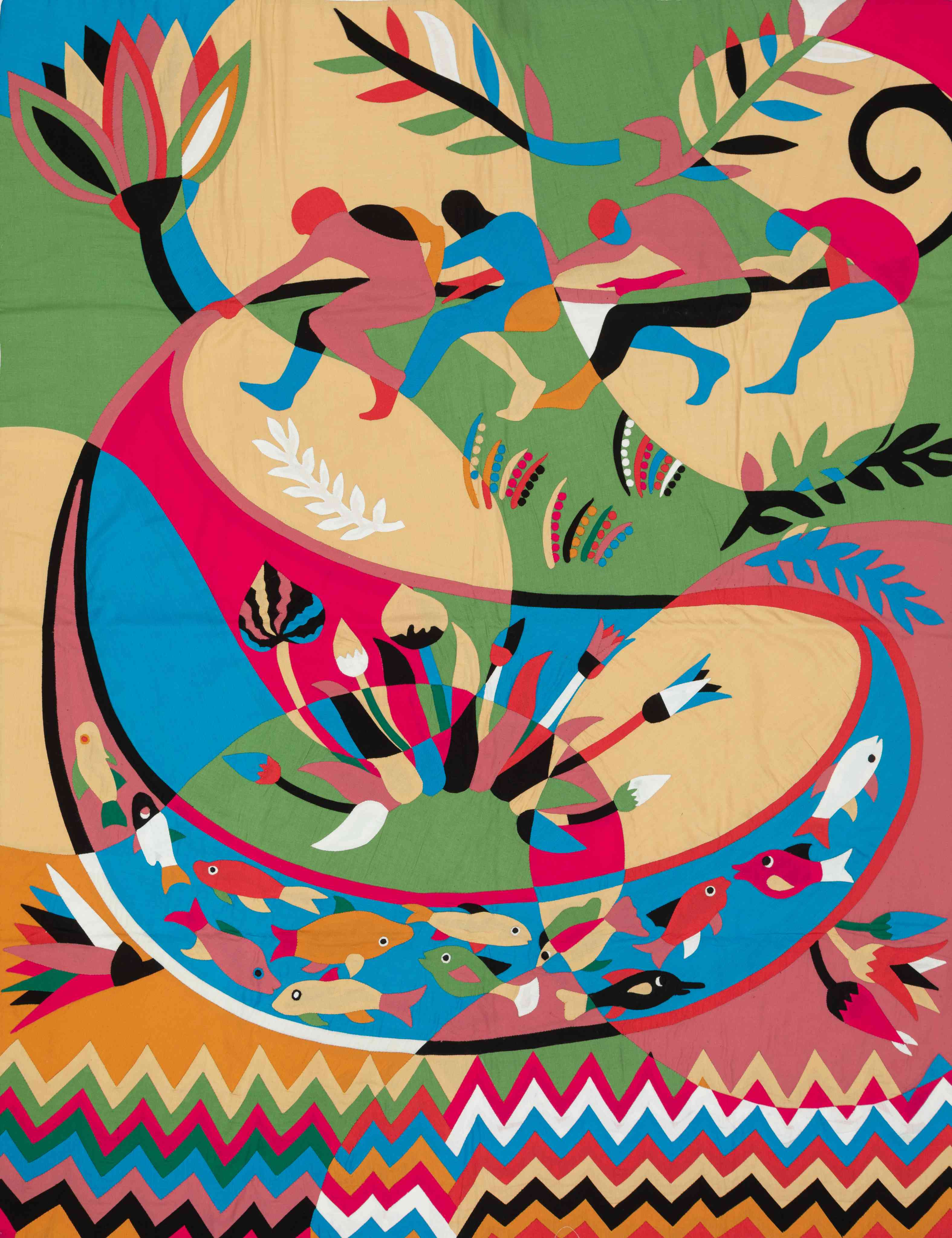
Fishermen
2022
Fishermen
Louis Barthelemy
2022
130 x 103cm
Hand appliquéd and embroidered Khayamiya on cotton canvas